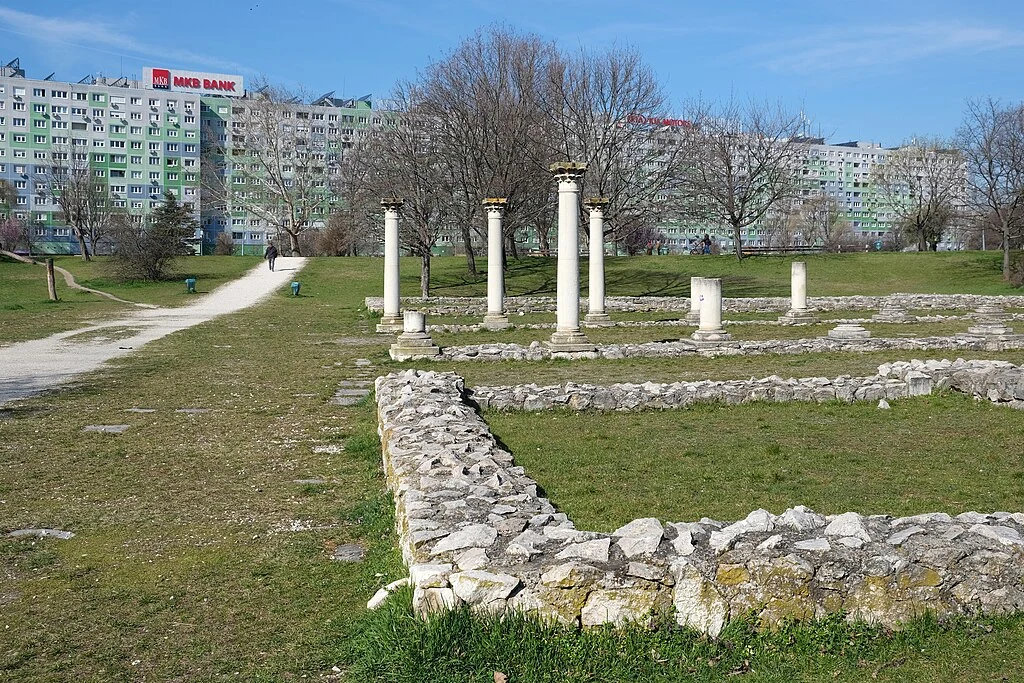
Photo by: kallerna, CC BY-SA 4.0
Roman ruins at Flórián Square Park in Óbuda, Budapest, with ancient stone foundations in the foreground and a large modern building rising in the background under a clear blue sky — a striking juxtaposition of past and present.
District III: Óbuda Budapest – A Walk Through Ancient Past
Introduction
District III, Óbuda, is often overshadowed by the grandeur of central Budapest, yet it holds a treasure trove of history that predates even the Roman Empire and offers visitors a unique glimpse into Hungary’s ancient heritage. Known as the oldest part of the Hungarian capital, Óbuda provides an essential sight for anyone planning days in Budapest who wants to explore beyond the typical tourist itinerary. This historic district offers a unique blend of ancient ruins, charming cobbled streets, and a laid-back atmosphere that invites exploration from the city center to the peaceful Buda Hills. Join us on a walking tour through Óbuda, where history comes alive at every corner, and modern life harmoniously coexists with the past in ways that reveal the lives of ancient Romans living in Aquincum alongside centuries of Hungarian local history.
Know Before You Go
Before beginning your exploration, it’s helpful to understand that Óbuda represents the ancient heart of what would become modern Budapest, with archaeological evidence dating back to the Stone Age. The district is easily accessible via the suburban railway (HÉV) from the city center, making it a perfect day trip for visitors wanting to explore Óbuda’s rich cultural landscape. Consider booking a guided tour if you want deeper insights into the area’s complex history, or follow this walking itinerary to discover the district’s treasures at your own pace. The area offers excellent gastronomy options and traditional food and drinks, making it ideal for a full day of exploration.
1. Start at Flórián Square
Why Start Here: Begin your journey at Flórián Square (Florian Square), a central hub in Óbuda that seamlessly blends the district’s ancient history with its modern developments. The square is named after Saint Florian, the patron saint of firefighters, and serves as a gateway between Buda and the historic heart of the district, surrounded by both residential and commercial buildings that reflect centuries of urban development.
What to See:
Roman Ruins: Right in the heart of the square, you’ll find remnants of a Roman military camp, part of the ancient settlement that once thrived in the Pannonia Province. These ruins offer a fascinating sight into the district’s Roman past and set the stage for the historical journey ahead, showing how ancient Romans living in Aquincum established their presence in this strategic location.
Archaeological Discoveries: The area around the square contains artifacts discovered in 1904, including metal tools, glassware, and fragments that reveal daily life in Roman times. These finds help visitors understand the continuity of settlement from ancient times to the present day.
2. Explore Aquincum Museum and Archaeological Park

A Journey Back in Time: A short walk from Flórián Square via the suburban railway stop, the Aquincum Museum and Archaeological Park represents one of the most important archaeological sites for understanding the lives of ancient Romans living in this region. This outdoor site contains the remains of what was once the capital of the Roman province of Pannonia and stands as one of the largest and most significant archaeological discoveries in Hungary.
What to Explore:
Roman Ruins: Wander through the extensive ruins of the ancient civilian town, including remnants of the amphitheater, thermal baths, and residential buildings with their original stone foundations and large columns still visible.
Museum Exhibits: Visit the small museum to see a collection of artifacts uncovered at the site, including Roman mosaics, sculptures, wall paintings, and everyday objects like metal tools and glassware that provide insight into life in ancient Aquincum. The museum also features a shrine area and graffito examples that show how ordinary people left their mark on history.
Archaeological Features: The outdoor site contains reconstructed buildings that help visitors visualize how this thriving settlement looked during its peak, when it served as a crucial outpost of Roman civilization in the region.
👉 Read more about the secrets of Aquincum’s Roman baths here.
3. Discover Graphisoft Park – Óbuda’s Modern Tech Hub

While Óbuda is most famous for its Roman heritage and historic charm, it’s also home to one of Budapest’s most modern success stories: Graphisoft Park. Built on the grounds of a former gasworks along the Danube, this innovative campus blends preserved industrial architecture with sleek contemporary offices. Today it serves as a green, riverside hub for global technology companies such as Microsoft and SAP, while also hosting the headquarters of Graphisoft — the Hungarian firm behind the pioneering ARCHICAD software. The park’s landscaped grounds and academic links, including the Aquincum Institute of Technology, highlight Óbuda’s unique mix of ancient roots and forward-looking innovation.
4. Walk to Óbuda’s Fő tér (Main Square)
The Heart of Óbuda: After immersing yourself in Roman history, continue your walk through the narrow streets to Óbuda’s charming Fő tér, the main square of the district and the cultural heart of this historic area. This market place has served as the social center of Óbuda for centuries, surrounded by historical buildings and filled with a lively atmosphere that captures the essence of traditional Hungarian community life.
What to See:

Baroque Architecture: Admire the Baroque-style Town Hall and the elegant Zichy Palace, both of which add to the square’s historic charm with their impressive facades and architectural details that speak to the area’s importance during the Habsburg era.
Bronze Statues by Imre Varga: Look for the quirky bronze sculptures scattered around the square, depicting scenes from everyday life in Óbuda. These statues by renowned artist Imre Varga add a playful touch to the area and are a favorite among visitors for photo opportunities, showing everything from women with umbrellas to people waiting for buses.
Historic Courtyard: Explore the inner courtyard areas of some buildings around the square, where you can discover hidden architectural gems and get a sense of how residents have lived in this district across the centuries.
5. Visit the Vasarely Museum

Art and Op Art: Located just a short walk from Fő tér, the Vasarely Museum is dedicated to the works of Victor Vasarely, the Hungarian-French artist who is considered the father of the Op Art movement. Housed in a beautiful villa, the museum offers a fascinating look at Vasarely’s innovative work, characterized by bold geometric shapes and vibrant colors that create stunning optical illusions.
What to Explore:
Art Exhibits: The museum houses an extensive collection of Vasarely’s works in multiple rooms, showcasing his revolutionary approach to visual art. As you walk through the galleries, you’ll be mesmerized by the optical illusions and the interplay of form and color that defines this unique artistic movement.
Historic Setting: The museum itself is located in a restored villa that adds to the charm of the experience, providing an elegant backdrop for the contemporary artworks.
6. Discover Cultural Gems Along Lajos Street
Hidden Treasures: As you continue your walk along Lajos Street and the surrounding area, make your way to several cultural attractions that showcase Óbuda’s diverse heritage beyond its Roman past.
What to See:
Old Synagogue of Óbuda: Visit one of the oldest synagogues in Budapest, which has been beautifully restored and offers a peaceful retreat from the busier parts of the district. Step inside to admire the elegant architecture and learn about the history of the Jewish community in Óbuda, which played a vital role in the district’s development.
Zsigmond Kun Flat Museum: This unique small museum recreates a typical Budapest apartment from the early 20th century, offering visitors insight into middle-class life in historical Hungary and how families lived in this district.
Lajos Kassák Museum: Dedicated to the avant-garde Hungarian writer and artist Lajos Kassák, this museum showcases the work of one of Hungary’s most important modernist figures and his contributions to European artistic movements.
Toy Museum: A delightful attraction that appeals to visitors of all ages, featuring toys and games from different historical periods that reflect changing childhood experiences across centuries.
7. Explore Szentlélek tér and Surrounding Areas
Spiritual and Cultural Heritage: Make your way to Szentlélek tér, a charming square that represents the spiritual heart of historic Óbuda and offers visitors a chance to explore the district’s religious and cultural traditions.
What to Discover:
Historic Church: The square is dominated by a beautiful baroque church that has served the community for centuries, with an interior featuring traditional Hungarian religious art and architecture.
Convent Buildings: Nearby convent structures show how religious communities shaped the development of this area, contributing to education and social services throughout the district’s history.
Traditional Architecture: The buildings surrounding the square showcase typical Óbuda residential architecture, with their characteristic design elements that have been carefully preserved to maintain the area’s historic character.
8. Relax by the Danube at Traditional Restaurants in Óbuda
Traditional Hungarian Fare: After a day of walking and exploring, treat yourself to a meal at one of the renowned restaurants in Óbuda known for traditional Hungarian cuisine and excellent gastronomy. The area near the Danube offers several dining options that provide both cozy atmosphere and authentic food and drinks.
What to Enjoy:
Hungarian Specialties: Indulge in dishes like goulash, pörkölt (stew), and somlói galuska (a rich dessert made of sponge cake, chocolate sauce, and whipped cream). The hearty flavors and warm ambiance make it a perfect end to your day of exploration.
Local Atmosphere: These establishments often occupy historic buildings with traditional courtyards, offering diners a chance to experience authentic Hungarian hospitality in settings that have welcomed guests for generations.
9. End Your Walk at Hajógyári Island (Óbuda Island)
Nature and Relaxation: Conclude your walk with a visit to Hajógyári Island, also known as Óbuda Island, located just across the Danube and accessible via Árpád Bridge. This island serves as a popular recreational spot, offering green spaces, walking paths, and beautiful views of both Buda and Pest sides of the river.
What to See and Do:
Stroll Along the River: Take a leisurely stroll along the riverbank, enjoying the tranquility of the water and the natural beauty of the island while taking in panoramic views of the Hungarian capital.
Seasonal Events: If you’re visiting in the summer, you might catch one of the many festivals or events that take place on the island, including the famous Sziget Festival, which transforms this peaceful spot into one of Europe’s premier music destinations.
Connection to Szentendre: The island also serves as a stepping stone for those wanting to continue their journey to the charming town of Szentendre, accessible by the HÉV suburban railway system.
Conclusion
Your walk through District III: Óbuda has taken you on a remarkable journey through time, from the ancient Roman ruins that show the lives of ancient Romans living in Aquincum to the charming cobbled streets of Fő tér and the peaceful shores of the Danube. This historic district’s rich heritage, combined with its laid-back atmosphere and diverse cultural attractions, makes it an essential sight for anyone wanting to understand the full scope of Budapest’s history.
Whether you followed our suggested itinerary or created your own path through the narrow streets and historic squares, Óbuda offers layers of discovery that reward curious travelers. From the Stone Age settlements to Roman civilization, from baroque architecture to modern art, this district encapsulates thousands of years of human habitation in one walkable area.
As you relax by the river or plan your next adventure to the nearby Buda Hills, take a moment to reflect on the incredible layers of history you’ve uncovered and the timeless charm of this district. Whether you’re a history buff, an art lover, or simply seeking a peaceful escape from the busy city center, Óbuda provides an authentic glimpse into the soul of the Hungarian capital that few tourists ever discover. Consider booking additional guided tours or extending your days in Budapest to fully appreciate all that this remarkable district has to offer.