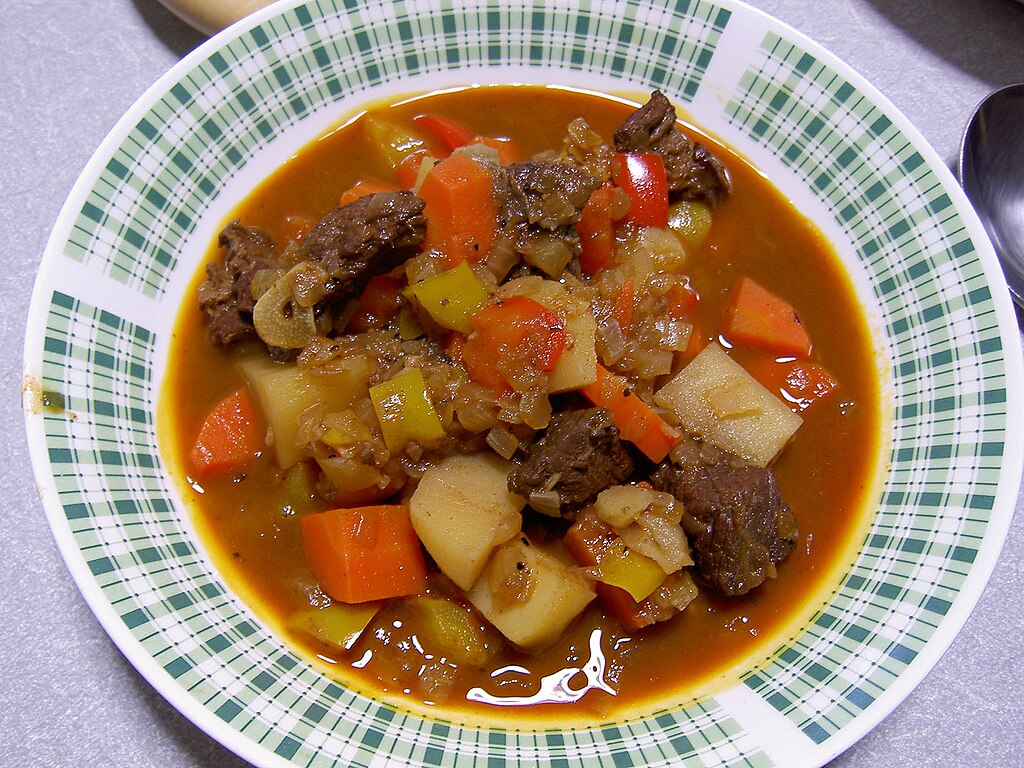
Photo by: m.louis, CC BY-SA 2.0
A bowl of authentic Hungarian goulash soup served with tender beef chunks, potatoes, carrots, and paprika-rich broth.
When you hear the word goulash, you probably think of a warm, hearty stew. But if you ask a Hungarian about goulash, you’ll likely get a proud correction: “Ah, you mean Gulyás!” In Hungary, goulash isn’t just food—it’s heritage, history, and home. Whether you’re a culinary traveler or simply craving something deeply comforting, this iconic dish deserves your full attention.
Let’s explore what goulash truly means in Hungarian, how it differs from what many outsiders think, and how to make an authentic bowl of Gulyás that would make any Hungarian grandmother proud.
What Is Goulash in Hungarian?
In Hungarian, goulash is called Gulyás (pronounced goo-yahsh), and it literally means “herdsman.” The word reflects the dish’s rustic origins—simple yet soul-warming meals cooked over open fires on the Great Hungarian Plain by cattle herders.
But here’s where it gets interesting: outside Hungary, goulash can mean very different dishes. In parts of Europe, it often refers to a thick meat stew, while American goulash commonly combines ground beef, pasta, and tomato sauce.
Confused yet? You’re not alone—and that’s why understanding the true essence of Gulyás is so important.
Gulyás ≠ Pörkölt ≠ Paprikás
It’s common for travelers to mix up three cornerstone dishes of Hungarian cuisine:
- Gulyás – A hearty soup, served with bread
- Pörkölt – A thicker stew, usually with less broth
- Paprikás – Creamier, often chicken-based, with sour cream
Each dish has its own place at the Hungarian table, but Gulyás remains the most iconic—especially when served steaming hot in a traditional metal cauldron (bogrács).
Tip for travelers: If a restaurant in Budapest offers “goulash stew,” it’s likely catering to tourists. Ask for Gulyásleves (goulash soup) for the real deal.
A Dish Born on the Great Hungarian Plain

Gulyás developed from the cooking traditions of Hungarian cattle herders on the Great Hungarian Plain. Early versions were prepared over open fires, using meat and simple ingredients that could be carried or preserved during long journeys. Paprika became an important ingredient in Hungarian cooking during the 18th and 19th centuries, helping shape the gulyás we know today.
In the 19th century, Gulyás became a symbol of Hungarian national identity, especially during times of Austrian control. It was a way of saying: “This is ours.”
And today? It’s served in homes, festivals, food halls, and fine dining restaurants all over Hungary.
What Makes Hungarian Gulyás Unique?
Authentic Gulyás is a balance of bold flavor and subtle warmth. It’s neither overly spicy nor too rich—just incredibly satisfying.
Essential Ingredients:
- Beef (usually chuck or shin)
- Onions
- Carrots and parsnips
- Potatoes
- Garlic
- Hungarian sweet paprika
- Caraway seeds
- Bay leaves
- Water or beef broth
Some versions include csipetke, tiny pinched egg noodles added just before serving.
❗ Traditional gulyás is a paprika-seasoned soup, not a thick, sour-cream-based stew. Some Hungarian recipes include fresh tomatoes or peppers, and csipetke (small pinched egg noodles) is a traditional addition.
Authentic Gulyás Recipe (Traditional Hungarian Goulash Soup)
Here’s how to make the real thing at home:
🛒 Ingredients:
- 2 tablespoons lard or oil
- 2 onions, finely chopped
- 1.5 pounds beef chuck, cut into cubes
- 1 tablespoon Hungarian sweet paprika
- 2 cloves garlic, minced
- 2 carrots, sliced
- 1 parsnip, sliced
- 2 medium potatoes, diced
- Salt, pepper, caraway seeds, bay leaf
- 4 cups water or beef broth
- Optional: csipetke noodles
🍳 Instructions:
- In a large pot, heat lard and sauté onions until golden.
- Remove from heat briefly, stir in paprika (this prevents bitterness).
- Add beef cubes and sear on all sides.
- Return to heat, add garlic, caraway, bay leaf, salt, and pepper.
- Pour in water or broth and simmer gently until the beef begins to soften, usually 60–90 minutes, depending on the cut. Add more liquid if needed to maintain a soup-like consistency.
- Add carrots, parsnip, and potatoes. Cook until tender.
- If using, add csipetke in the last 10 minutes.
- Adjust seasoning and serve with crusty bread.
This soup gets better the next day, so make extra!
Where to Try Gulyás in Budapest
If you’re inspired to cook authentic Hungarian dishes like goulash, you’ll love exploring where locals shop for the freshest ingredients. From fragrant paprika stalls to butchers specializing in marbled beef cuts, the Handbuch für den Budapest Central Market: Zusätzliche geheime Märkte, die die Einheimischen lieben will take you straight to the heart of Hungary’s food culture. You can also find food stalls and casual places to eat at some Budapest markets, making them convenient stops for a meal or a quick bite.
Final Thoughts: Why Gulyás Captures the Hungarian Spirit
There’s something magical about a dish that can warm your belly and your soul at the same time. Gulyás is more than just a soup—it’s a story of heritage, resilience, and community. Whether served in a Budapest café or bubbling over a fire on the Puszta, it carries with it the memory of centuries and the taste of home.
From humble shepherd origins to a beloved national dish, goulash continues to represent the heart of Hungarian cooking. To explore how this classic fits into Hungary’s broader food culture, visit Was macht ungarisches Essen so besonders? Traditionelle und Straßentypen von Speisen erklärt — and for a deeper historical perspective, see Britannica’s entry on goulash.
FAQ – Hungarian Goulash
What is in traditional Hungarian goulash
Traditional Hungarian goulash is made with chunks of beef, onions, paprika, and root vegetables like carrots and parsnips. It often includes potatoes or csipetke (pinched noodles), and the dish is simmered slowly to develop rich, aromatic flavors. Paprika is the star ingredient, contributing its distinctive red colour and rich, sweet pepper flavour.
What is the difference between Hungarian goulash and regular goulash?
Hungarian goulash (Gulyás) is a soup-like dish with beef, vegetables, and paprika in a spiced broth. In contrast, what’s called “regular goulash” in places like the U.S. is usually a casserole made with ground beef, pasta, and tomato sauce. The Hungarian version is rooted in tradition and simplicity — the American one is a reinterpretation.
What vegetables go in Hungarian goulash?
Common vegetables in Hungarian goulash include onions, carrots, potatoes, parsnips, and green peppers. Tomatoes or tomato paste are sometimes added for acidity and richness. The vegetables are not just filler — they balance the beef and absorb the bold paprika flavors during long simmering.
What is traditionally eaten with goulash?
Hungarian gulyás is traditionally enjoyed with fresh bread, and many versions contain csipetke (small handmade egg noodles) cooked directly in the soup. Its rich paprika-flavoured broth makes it a satisfying meal on its own.