Foto: DepositPhoto.com – Alle Rechte vorbehalten. Nicht ohne Erlaubnis weiterverbreiten.
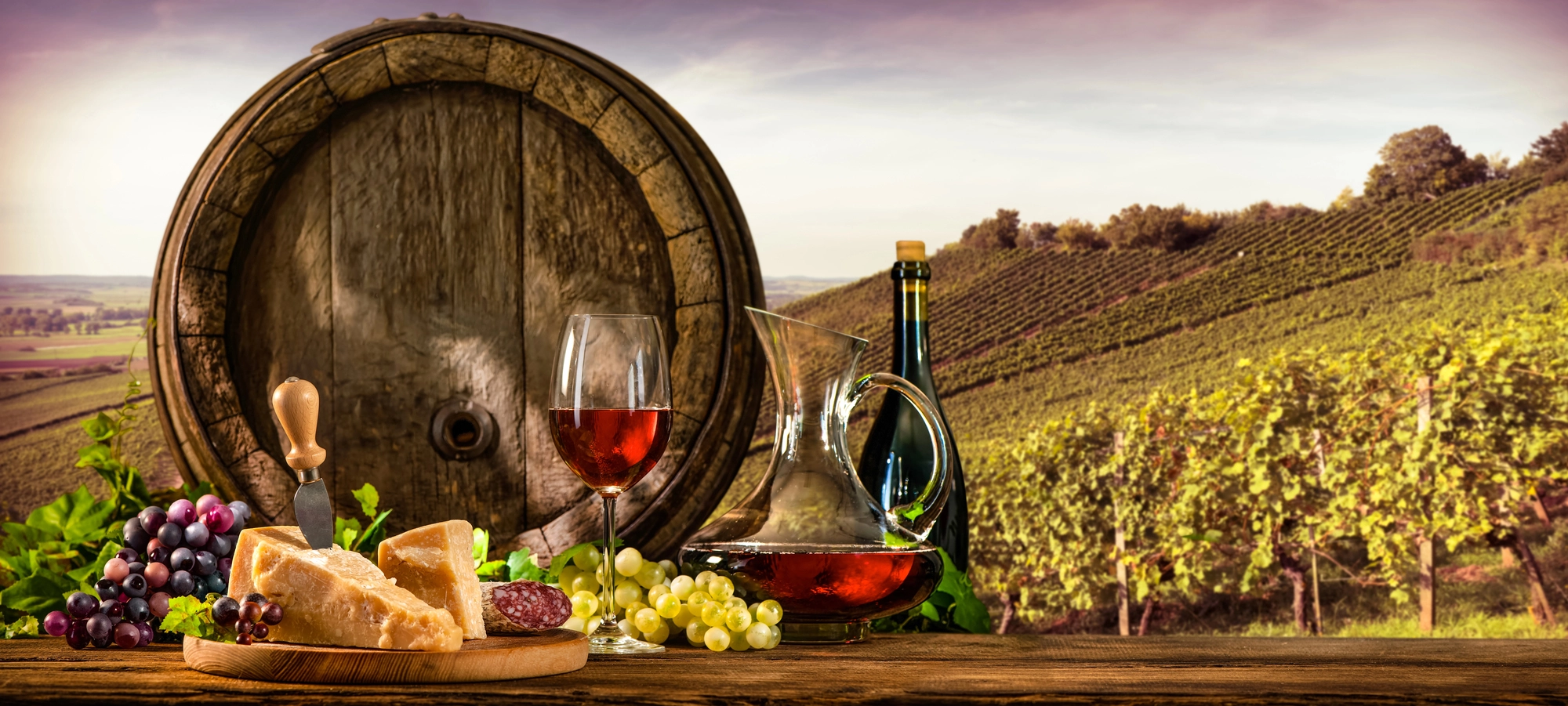
Ungarische Weinberge mit Weinfass, Glas Roséwein, Trauben, Brot und Käse auf einem malerischen Weinstädtl-Landschaftsbild.
Ungarischer Wein: Eine reiche Geschichte, Regionen und Geschmacksrichtungen
Ungarn ist eines der ältesten Weinbaugebiete Europas – doch seine Weine bleiben für viele Reisende noch immer ein Geheimtipp. Von dem goldenen und süßen Tokaj über die kräftige und robuste Egri Bikavér (“Bull’s Blood”), diese Handbuch für ungarisches Wein bietet ein einzigartiges Verkostungsabenteuer, das in jahrhundertelanger Tradition und Widerstandskraft Wurzeln hat. Heute erlangt die ungarische Weinherstellung wieder ihren Platz auf der Weltbühne.
Was macht ungarische Weine so einzigartig? Es geht alles um das Terroir
Einer der Gründe dafür, dass die ungarischen Weine so vielfältig und charakterstark sind, ist das bemerkenswerte Repertoire der Landwirtschaft. Terroir. Dieser französische Begriff beschreibt, wie Boden, Klima, Topografie und lokale Traditionen zusammenwirken und zu unterschiedlichen Weinstilen führen.
Die Weinregionen Ungarns bieten eine beeindruckende Vielfalt an Böden: vulkanische Gesteine in Tokaj und Somló, Kalkstein und Loess in Eger sowie mineralreiches Basalt rund um den Balaton. Die vulkanischen Böden von Somló und Tokaj verleihen hohe Säure und mineralische Frische, was berühmte Weine wie trockenes Furmint und Tokaji Aszú Ihr charakteristisches Profil.
Das Klima trägt zu dieser Vielfalt bei – kühlerere nördliche Regionen wie Eger produzieren strukturierte Rotweine mit ausgewogener Tannin, während wärmere Gebiete wie Villány, Szekszárd, und Tolna Reife Rebsorten wie Cabernet Sauvignon, Merlot und Portugieser schön.
Lokale Traditionen, wie zum Beispiel Putzig Die Klassifizierung in Tokaji erfolgt durch eine sorgfältige Mischung native grapes in Egri Bikavér, preserve the soul of Hungary’s wine producers. The resilience after the phylloxera epidemic and decades of mass production shows how Hungarian tribes shaped this rich legacy.
🔑 Key Factors That Influence HungarianWine Taste (with Regional Examples)
Erde:
Tokaj: Volcanic soils rich in minerals shape the bright acidity and distinct minerality of Furmint, Hárslevelű, und Tokaji Aszú (often classified by Putzig).
Somló: Also volcanic, producing crisp, mineral-driven whites like Juhfark und Hárslevelű.
Eger: Limestone and loess soil create balanced tannin in reds like Egri Bikavér (Bull’s Blood) and fresh whites like Leányka.
Villány & Szekszárd: Rich clay and loess soils help ripen bold reds — think Cabernet Franc, Cabernet Sauvignon, Merlot, und Portugieser.
Klima:
Cooler North (Tokaj, Eger, Somló): Higher acidity and vibrant fruit — ideal for trockenes Furmint, Tokaji Aszú, Juhfark, und Egri Bikavér.
Warmer South (Villány, Szekszárd, Tolna): Ripe, full-bodied reds with smooth tannin — classic for Cabernet Sauvignon, Cabernet Franc, Merlot, und Portugieser.
Topografie:
Tokaj Hills & Bodrog River: The unique topography creates morning mists that help noble rot develop — vital for sweet Aszú wines.
Lake Balaton & Badacsony: Proximity to water moderates temperature, helping whites like Olaszrizling, Kéknyelű, und Muscat Blanc à Petits Grains thrive.
Somló’s Basalt Hill: Steep slopes and volcanic soils give Juhfark its signature minerality.
Tradition:
Tokaj: Centuries-old Putzig system classifies sweetness levels of Aszú.
Eger: Blending native grapes like Kadarka with Kékfrankos, Cabernet Sauvignon, and Merlot to craft Egri Bikavér.
Villány & Szekszárd: Traditional oak aging for reds like Cabernet Franc und Merlot adds depth.
Hungarian Tribes Influence: Indigenous grapes like Kadarka, Kékfrankos, Hárslevelű, und Juhfark keep Hungary’s wine heritage alive.
🍇 Tip for Readers
Every vineyard reflects this mix of soil, climate, topography, and tradition — from crisp white wine in volcanic Somló to spicy red wine in loess-rich Eger! Egri Bikavér is my favourite – we always had it around the house while I was growing up.
A Storied History of Viticulture – Vine-Growing
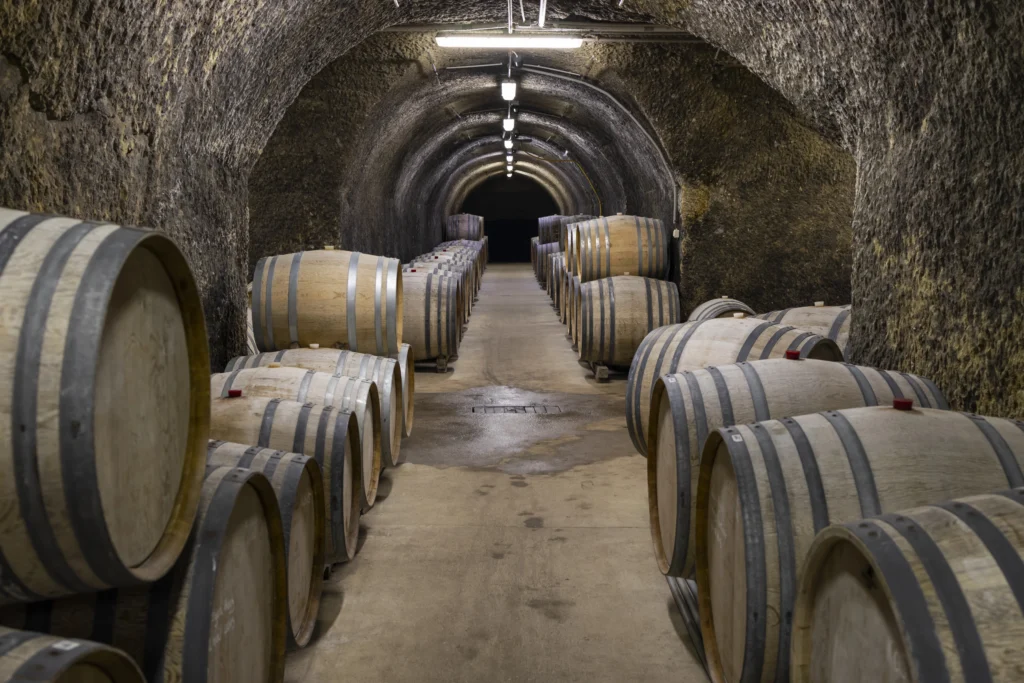
Foto: DepositPhoto.com – Alle Rechte vorbehalten. Nicht ohne Erlaubnis weiterverbreiten.
Traditional wine cellar with wooden barrels aging Egri Bikavér red wine near Eger, Hungary.
Hungary’s winemaking tradition dates back to Roman times. Over centuries, it survived the Ottoman occupation, the phylloxera epidemic, and the communist era’s decline. Today, passionate wine producers craft everything from noble rot dessert wines to crisp whites and hearty reds — just as Louis XIV once called Tokaji the “King of Wines, King of Kings.”
Outside Hungary, more wine lovers are discovering why the Royal Tokaji has such a legendary reputation. From Somló’s minerally Juhfark to Hungary’s most famous wine — sweet Tokaji Aszú — each vineyard tells a story.
Ikonische ungarische Weinstädte
Hungary has 22 diverse wine regions, each with unique grape varieties and traditions. This guide to Hungarian wines wouldn’t be complete without a taste of these famous wine regions:
Tokaj — Home to Tokaji Aszú, Hungary’s noble rot sweet wine made from Furmint, Hárslevelű, and Muscat Blanc à Petits Grains. Look for its puttonyos classification on the bottle.
Eger — Famous for Egri Bikavér, a robust blend of native and international grapes, and vibrant whites like Leányka.
Villány — Known for elegant reds like Cabernet Franc, Cabernet Sauvignon, Merlot, and Portugieser. This warm region produces some of Hungary’s best full-bodied red wines.
Somló — Hungary’s smallest but iconic region for volcanic whites, especially minerally Juhfark and Hárslevelű.
Szekszárd — Praised for spicy Kadarka, Kékfrankos, and blends rich in tannin.
Badacsony — Overlooking Lake Balaton with unique white wine varieties like Kéknyelű and Olaszrizling.
Etyek-Buda — Near Budapest, ideal for fresh whites and sparkling wines.
Die Must-Try-Weine Ungarns

From white grapes to native reds, Hungary’s wine list offers something for every palate:
Tokaji Aszú: The world’s oldest botrytized (noble rot) sweet wine — rich, golden, and balanced by high acidity.
Dry Furmint: Crisp, minerally white wine with refreshing citrus notes.
Egri Bikavér (Bull’s Blood): A robust, spicy red wine blend of native grapes like Kékfrankos and Kadarka with international grapes like Merlot and Cabernet Sauvignon.
Kékfrankos: A juicy, peppery red with vibrant acidity — Hungary’s answer to Blaufränkisch.
Juhfark: From Somló, a dry wine with minerality, high acidity, and aging potential.
Cabernet Franc & Cabernet Sauvignon: Grown mainly in Villány and Szekszárd — round, structured reds with soft tannin and dark fruit.
Portugieser: Light-bodied, easy-drinking red wine, especially popular in Villány.
Hárslevelű: Aromatic white wine, a cousin to Furmint, often blended for complexity.
Leányka: Delicate, floral white wine found mainly in Eger.
Kadarka: Peppery, light red wine with centuries of history.
Hungary’s wine styles span vibrant white wines to full-bodied reds, all shaped by local terroir and the passion of Hungarian wine producers.
Perfekte Kombinationen & Erlebnisse in Budapest

No guide to Hungarian wines is complete without local pairings. Rich reds like Egri Bikavér complement goulash and paprika dishes, while Tokaji Aszú famously pairs with foie gras.
In Budapest, wine bars showcase the best vineyard selections — explore hidden cellars or join a tasting tour to discover these unique grape varieties. Look out for annual festivals like the Buda Castle Wine Festival to try wines you’d struggle to find outside Hungary.
Wo man ungarisches Wein probieren und kaufen kann
Visit historic wine cellars in Tokaj, Eger, and Villány.
Tour volcanic vineyards in Somló and taste rare whites like Juhfark.
In Budapest, wine bars and tasting rooms make it easy to sample diverse wine styles and build your personal wine list.International shops now stock Hungary’s most famous wines — just check the classification labels like Putzig for authentic Tokaji.
Abschluss: Trinken Sie ein Glas zu Ungarn
Whether you’re sipping Royal Tokaji in the vineyards of Tokaj or enjoying Egri Bikavér with friends in Budapest, Hungarian wines reflect a rich tapestry of terroir, grape varieties, and history. Each sip is a tribute to Hungary’s enduring wine industry and the passion of its wine writers, producers, and local wine lovers.
Cheers — Egészségedre!
FAQ – Beste Weine und Regionen
Was ist das nationale Weinland der Ungarn?
Hungary doesn’t have one official “national wine,” but many consider Tokaji Aszú to hold this title. Known as the “King of Wines, Wine of Kings,” Tokaji is a famous wine made from native grape varieties like Furmint und Hárslevelű in the Tokaj region. Its unique sweetness comes from noble rot (Botrytis cinerea) and is classified by Putzig, showing how sweet and rich each bottle is.
Sind ungarische Weine gut?
Yes — Hungarian wines are gaining global recognition for their quality, diverse wine styles, and deep connection to local terroir. From crisp dry Furmint to robust Egri Bikavér blends, the country’s wine producers use centuries-old traditions to craft whites and reds with vibrant acidity, balanced tannin, and expressive flavors. Hungary’s wine industry is experiencing a renaissance, winning awards in Europe and beyond.
Wie wird der berühmte ungarische Wein bezeichnet?
Hungary’s most famous wine is undoubtedly Tokaji Aszú, the sweet dessert wine from the Tokaj region. However, Egri Bikavér (“Bull’s Blood”) is another iconic wine — a robust red blend from the Eger wine region, made with native grapes like Kadarka und Kékfrankos, plus international grapes like Merlot and Cabernet Sauvignon.
Was ist der beliebteste Wein in Ungarn?
Tokaji wines, especially dry Furmint and Tokaji Aszú, remain popular inside and outside Hungary. Among red wines, Egri Bikavér and the full-bodied reds of Villány — such as Cabernet Franc, Cabernet Sauvignon, und Merlot — are favorites among Hungarians. Many locals also enjoy fresh white wines from regions like Somló, Badacsony, and Etyek-Buda, thanks to the country’s diverse vineyards and native grape varieties.