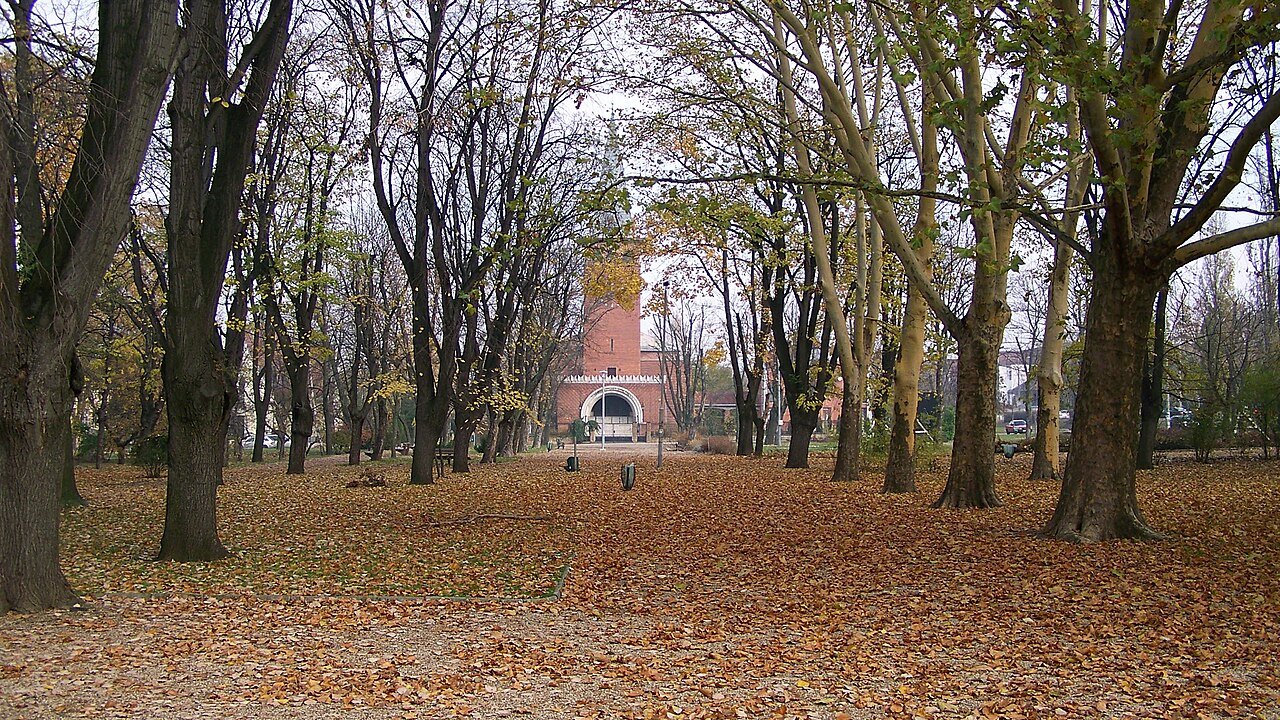
Photo: Supergranat0820, CC BY 3.0, via Wikimedia Commons.
Kossuth Square in Pestszentlőrinc, Budapest’s District XVIII, with the Reformed Church overlooking the park.
Introduction
Budapest District 18 (District XVIII), officially known as Pestszentlőrinc-Pestszentimre, lies on the southeastern edge of Budapest near the city’s international airport. Formed from the once-independent communities of Pestszentlőrinc and Pestszentimre, the district offers quiet residential neighborhoods, leafy parks, aviation history and a strong sense of local community.
Visitors to Budapest District 18 can explore historic landmarks, Bókay Garden, traditional neighborhoods and Aeropark near Budapest Airport. Far removed from the grand boulevards and tourist crowds of central Budapest, Pestszentlőrinc-Pestszentimre offers a glimpse of the capital’s quieter suburban side.
1. Begin at Kossuth Square (Kossuth tér)
Begin your journey at Kossuth tér, a historic public square in the heart of Pestszentlőrinc. Long a focal point of local life, the square has witnessed important moments in the district’s history, including events during the 1956 Hungarian Revolution.
Take a stroll around the square and discover a quieter side of Budapest. Its memorials and surrounding streets offer a glimpse into the history and everyday life of this suburban community.
2. Visit the 1956 Memorial Park (Hargita tér)
Continue to Hargita tér, home to a memorial park dedicated to the 1956 Hungarian Revolution. This commemorative site recalls the district’s connection to the uprising and offers visitors an opportunity to reflect on an important chapter of Hungarian history.
3. Walk Through the Gloriett Residential Area

The Gloriett residential area offers a glimpse into a more modern chapter of District XVIII’s history. Development of the housing estate began in the late 1980s, while its name recalls a historic pavilion built in 1814 near today’s Gilice tér. Although the pavilion no longer stands, its story connects this everyday residential neighbourhood with a surprising piece of Budapest’s past.
4. Explore the Pestszentimre Historic District

Cross into Pestszentimre, the smaller of the two namesake towns, where history is still visible in preserved architecture:
- Pestszentimre Catholic Church (St. Emeric Church) is a Neo-Gothic church whose construction began in 1927. It was consecrated in 1939 and remains an important local landmark.
- Historic homes nearby reflect the architectural styles of past centuries, offering a glimpse of village life before urban expansion.
5. Aviation Heritage at Aeropark

One of District XVIII’s must-see attractions is Aeropark, located by Budapest Ferenc Liszt International Airport. This open-air museum showcases Hungary’s aviation history with vintage MALÉV aircraft, airport vehicles, and interactive exhibits. Visitors can even step inside retired planes, making it a unique stop for families and aviation enthusiasts.
6. Relax at Bókay Garden (Bókay Kert)
Next, unwind at Bókay Garden, a sprawling recreational park loved by locals. Here you’ll find:
- Walking paths shaded by trees
- Sports facilities, from tennis courts and a swimming pool to football fields
- Picnic areas perfect for a relaxed afternoon outdoors
The garden is named after Dr. Árpád Bókay, a renowned 19th-century pediatrician, and today it remains the green lung of the district.
7. Visit the Market Grounds
End your suburban exploration at Lőrinci Market (Lőrinci Piac), a neighbourhood market where residents shop for fresh produce and everyday essentials. The present market and market hall opened in 2003, continuing the area’s longstanding market tradition. It’s a chance to experience everyday life in District XVIII away from Budapest’s main tourist attractions.
Conclusion
Exploring District XVIII: Pestszentlőrinc-Pestszentimre offers a different side of Budapest—one defined by suburban calm, aviation history, and deep local traditions. From historic Kossuth Square to Aeropark’s aircraft, from leafy gardens to village churches, this district shows how history, community, and leisure intertwine on the city’s southeastern edge. If you’re looking to step off the tourist trail, Pestszentlőrinc-Pestszentimre rewards you with authenticity, open space, and a slower rhythm of life.
FAQ – Budapest District 18 Pestszentlőrinc-Pestszentimre
What is District XVIII Budapest known for?
District XVIII, also called Pestszentlőrinc-Pestszentimre, is known for its suburban charm, leafy parks like Bókay Garden, historic churches, and Aeropark near the airport, where you can explore vintage MALÉV aircraft.
How far is District XVIII from Budapest city center?
District XVIII lies on the southeastern edge of Budapest, about 25–30 minutes by car or public transport from the city center. It borders Budapest Ferenc Liszt International Airport, making it one of the city’s gateway districts.
Is Pestszentlőrinc different from Pestszentimre?
Yes. Pestszentlőrinc and Pestszentimre were once separate towns before merging into Budapest in 1950. Today, they form District XVIII together but still keep their individual character—Pestszentlőrinc being slightly larger and more urban, while Pestszentimre feels more village-like.
How can I get to District XVIII Budapest?
District XVIII is accessible by Budapest’s public transport network, including buses, trams, and rail connections. The best route depends on which part of this large district you want to visit. Use the official BKK journey planner for current routes and connections.